

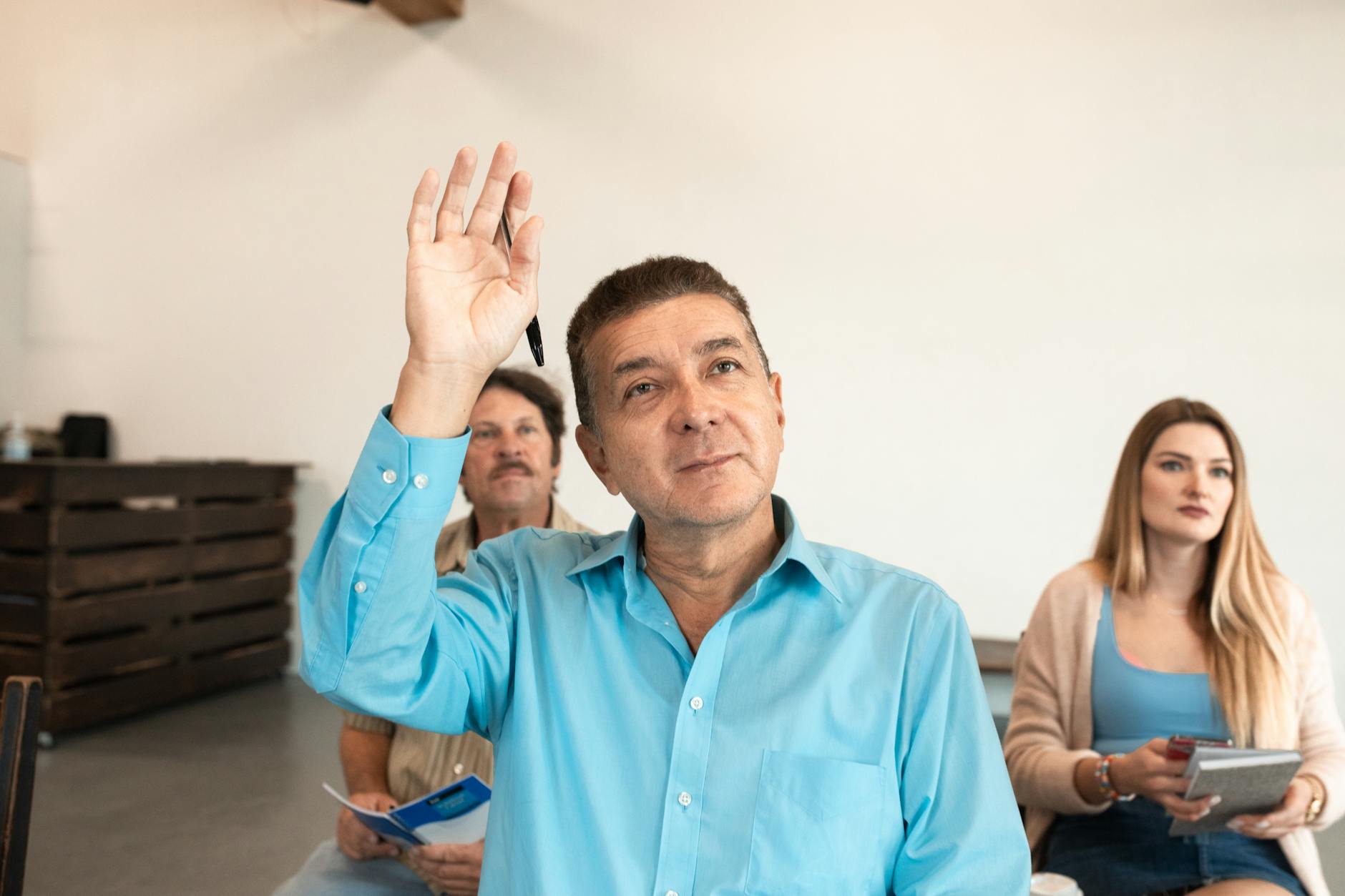
Hey, a little help really does go a long way. And that’s not just something dads say to get out of chores—it’s the truth, and it’s how we get stronger, together.
There’s a long-standing myth about fatherhood: that a “good dad” should be a one-man construction crew, emotional thermostat, financial planner, midnight medic, and occasional spider assassin. He’s supposed to be calm, competent, and somehow immune to exhaustion. Basically, the world expects dads to be Swiss Army knives with mortgages. But here’s the secret: nobody’s built like that—and you don’t have to be.
The problem? Nobody is actually built like that. Not even the guy who can assemble a crib without opening the instructions.
Asking for help doesn’t make a father weaker. It makes him smarter, stronger, and more available to the people who love him. The strongest dads aren’t the ones who pretend they’re fine while running on empty. They’re the ones who know when to say, “I could use a hand.” And trust me, that’s something to be proud of.
The old script: “Man up and muddle through”
Many fathers were raised on a very specific rulebook: keep your chin up, keep your problems private, and keep moving. Vulnerability, we were told, is dangerously close to collapse. So when fatherhood arrives with its beautiful chaos—diapers, deadlines, tantrums, bills, and the occasional existential crisis in the grocery aisle—too many dads respond by tightening the jaw and soldiering on.
It sounds noble. It is also a quick route to burnout.
Because the truth is, “doing it all” is not a badge of honor. Sometimes it’s just a very expensive way to become unavailable to your family.
The statistics tell a sobering story: approximately 1 in 10 fathers experience depression or anxiety during their partner’s pregnancy or in the first year after their child’s birth. That number jumps to 50% when the mother is also experiencing postpartum depression. Yet paternal mental health remains what researchers call a “silent pandemic”—common, harmful, and largely overlooked.
Help is not a surrender flag
There’s a strange cultural habit of treating help like a last resort, when in fact it’s a strategy. A good one.
Need a mental reset? Talk to a friend.
Need practical backup? Delegate chores.
Need emotional support? Speak honestly with your partner.
Need more than a pep talk? Call a therapist, doctor, coach, or support group.
That’s not weakness. That’s maintenance. And hey, no one gives a trophy to a car for refusing an oil change. Take care of yourself the way you’d take care of your favorite ride—because you matter even more.
The fathers who ask for help are not admitting defeat—they’re preserving their ability to keep showing up. They’re protecting their energy, their patience, and their sense of self. Which, incidentally, are all pretty helpful when you’re negotiating bedtime with a tiny hostage negotiator in pajamas.
Think of it this way: pilots use checklists. Surgeons work in teams. Engineers consult manuals. The most competent professionals in high-stakes fields don’t go it alone—they build systems of support. Fatherhood deserves the same respect.
Your kids are watching your example
Children are brilliant little copycats. They learn not only from what we say, but from what we normalize.
When a child sees their father ask for help, they learn several important lessons:
- It’s okay to admit when you’re overwhelmed
- Strength and honesty can coexist
- Problems are easier to face with support
- No one has to suffer in silence to be respected
That lesson matters for boys, who may grow up believing emotional independence means emotional isolation. It matters for girls, who deserve to see men model healthy communication and humility. And it matters for every kid who needs permission to be human.
A father who asks for help is not just caring for himself. He’s teaching a smarter family culture.
Recent research from Rutgers University found that children exposed to paternal depression at age five are significantly more likely to exhibit behavioral difficulties and poor social skills by age nine. The effects aren’t limited to early childhood—they can persist through middle and high school, affecting how children learn, connect with peers, regulate emotions, and perform academically.
But here’s the hopeful part: none of this is set in stone. When dads get the support they need, the positive effects ripple out to everyone. Your emotional well-being is like a lighthouse for your kids, guiding them safely through life’s storms. Supporting yourself isn’t selfish—it’s one of the best gifts you can give your family.
The real gift: a better version of you
Fatherhood asks a lot. It asks for presence, patience, flexibility, and a heroic tolerance for noise. If you’re carrying all of that alone, you may still function—but function is not the same as flourish.
Help gives you back the best parts of yourself—the ones you want your kids to remember:
- Patience, because you’re less depleted
- Perspective, because you’re no longer trapped in your own head
- Connection, because people feel trusted when you let them in
- Resilience, because shared burdens are lighter burdens
- Joy, because you have the bandwidth to actually enjoy the moment
When you’re running on fumes, everything feels harder. A minor tantrum becomes a crisis. A messy kitchen feels like a personal attack. Your partner’s reasonable request sounds like criticism. That’s not a character flaw—that’s what happens when a human being operates beyond capacity for too long.
Help restores your ability to respond instead of react. It gives you the space to be the parent you actually want to be, not just the one you can barely manage to be.
What asking for help actually looks like
For some fathers, the concept of “asking for help” feels abstract. What does it actually mean in practice? Here are concrete examples:
At home:
- “Can you handle bedtime tonight? I need an hour to decompress.”
- “I’m struggling with this. Can we figure it out together?”
- “I think we need to redistribute some of these responsibilities.”
With friends:
- “I’m going through something. Can we talk?”
- “I need to get out of my head for a bit. Want to grab coffee?”
- “Have you ever dealt with something like this?”
With professionals:
- Scheduling a checkup and being honest about stress levels
- Calling a therapist when sadness or anxiety persists
- Joining a support group for new fathers
- Talking to a financial advisor when money worries keep you up at night
In the community:
- Connecting with other dads through groups like Sad Dads Club or Postpartum Support International
- Participating in father-specific programs that focus on engagement and self-care
- Asking family members to pitch in with childcare or household tasks
None of these conversations require a dramatic breakdown. They’re just honest check-ins with the people in your corner.
Breaking the stigma, one conversation at a time
The silence around paternal mental health isn’t just an individual problem—it’s a cultural one. For too long, the focus on perinatal mental health has centered almost exclusively on mothers, while fathers’ struggles have been dismissed or ignored.
But the tide is turning. Healthcare providers are increasingly recognizing that fathers should be screened for depression and anxiety during their partner’s pregnancy and postpartum checkups, just like mothers. Organizations are creating father-specific resources and support networks. Research is documenting what many families already know: when fathers struggle, everyone feels it.
Change happens when individuals are willing to speak up. Every father who admits he’s struggling makes it easier for the next one. Every conversation about paternal mental health chips away at the outdated notion that dads should suffer in silence.
You don’t have to be a spokesperson or an activist. You just have to be honest—with yourself, with your partner, with your doctor, with your friends. That honesty is revolutionary.
The partnership principle
One of the most important places to ask for help is also the closest: your partner.
Modern parenting is supposed to be a team sport, but too often it defaults to parallel play—two people managing separate task lists in the same house. Real partnership requires ongoing communication about who’s carrying what, who needs a break, and how to redistribute the load when one person is drowning.
This means:
- Regular check-ins about mental and emotional bandwidth
- Honest conversations about resentment before it calcifies
- Willingness to name what you need instead of expecting your partner to guess
- Recognizing that “helping out” isn’t the goal—shared responsibility is
When both parents feel supported, children benefit exponentially. They see collaboration instead of martyrdom. They learn that relationships thrive on communication, not silent scorekeeping.
Permission to be imperfect
Here’s a truth that doesn’t get said enough: you will not be great at this every single day. Some days you’ll be patient and present. Other days you’ll lose your temper over spilled juice. Some weeks you’ll feel like you’ve got it figured out. Other weeks you’ll wonder if you’re doing permanent damage.
That’s not failure. That’s fatherhood.
The goal isn’t perfection. It’s showing up, trying your best, and being willing to course-correct when you fall short. And sometimes, course-correcting means asking for help.
Give yourself permission to be a work in progress. Give yourself permission to admit when you’re overwhelmed. Give yourself permission to need support, rest, guidance, and grace.
Your kids don’t need a superhero. They need you—the real, imperfect, loving dad who shows up, tries again, and teaches them that life’s about effort, heart, and bouncing back. That’s the kind of hero they’ll remember forever.
The bottom line
Strong dads ask questions. They ask for directions when they’re lost. They ask for advice when they’re uncertain. They ask for help when they’re overwhelmed. They ask their kids how they’re feeling. They ask their partners what they need. They ask themselves if they’re okay—and they answer honestly.
This isn’t a sign of weakness. It’s a sign of wisdom.
Because the strongest thing a father can do isn’t to carry everything alone. It’s to build a life where he doesn’t have to.
So if you’re reading this and you’re struggling—whether with sleepless nights, financial stress, relationship tension, or the quiet weight of depression—know this: asking for help is not giving up. It’s gearing up. It’s choosing to be present for the long haul instead of burning out in the short term.
Your family doesn’t need you to be invincible. They need you to be available. And sometimes, staying available means reaching out.
A little help really does go a long way.
If you or someone you know is struggling with paternal mental health, resources are available through Postpartum Support International (postpartum.net), the Sad Dads Club, and Mental Health America. Talk to your healthcare provider about screening and support options.






Leave a Reply